Ah, music. A magic that outshines everything we do here.
Albus Dumbledore, Harry Potter and the Philosopher's Stone (J. K. Rowling)
Music Therapy
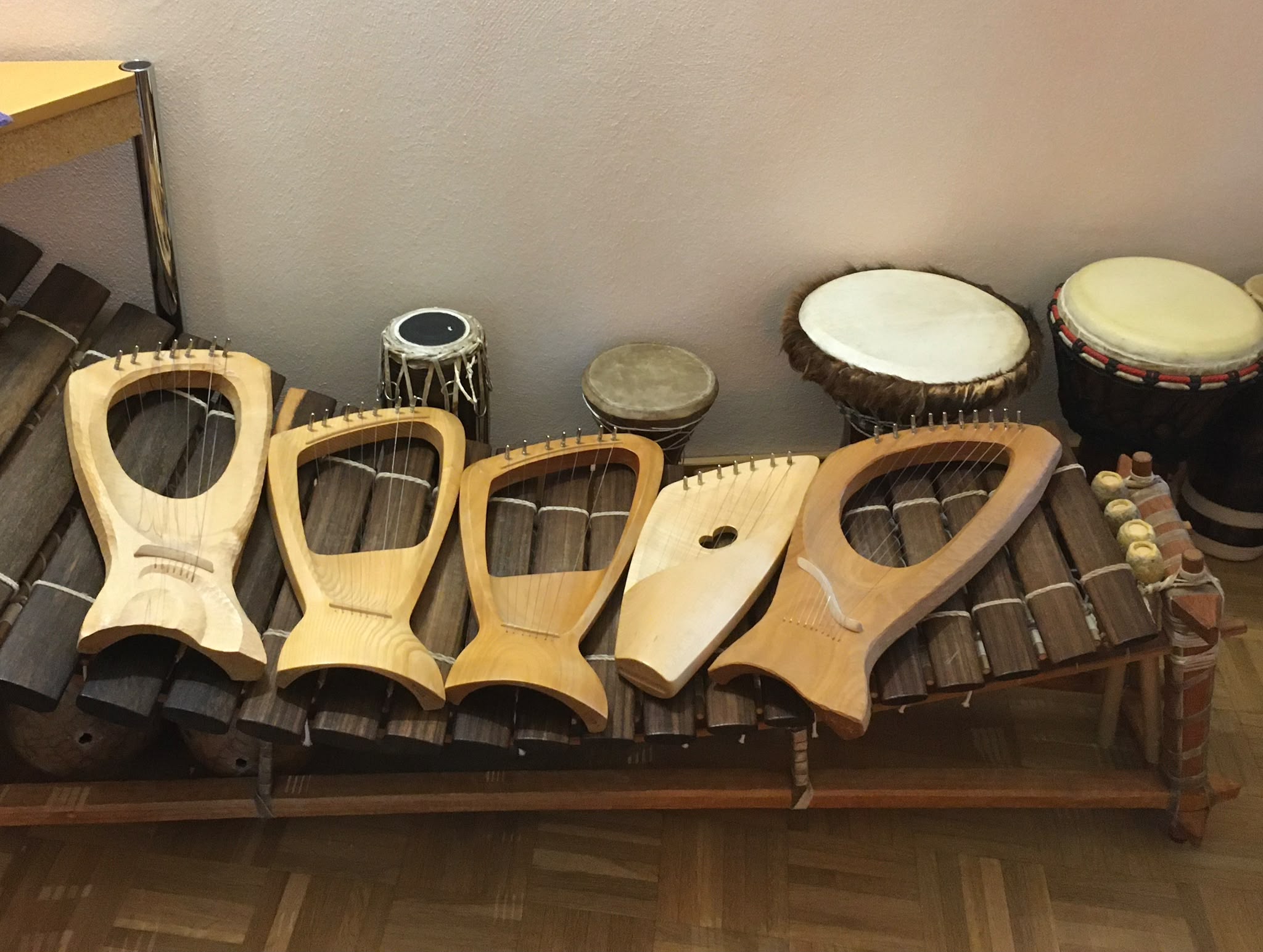
It was a light-bulb moment straight out of a storybook. I was sitting on the Milan underground when I first really noticed the word “music therapy” in an advertisement. I knew immediately: “That is what I want to do. That is my profession!” A little later, when I attended my first music therapy course, I had the feeling from the very start that I had finally found what I had always been looking for.
Perhaps it was the way music makes me feel that sparked my wish to use it to help others, too. At its heart, music therapy is about using music and sound to support wellbeing, build relationships, encourage communication beyond spoken words and, not least, share joy and a sense of community.
Throughout my many years as a music therapist, I have found it enriching, uplifting and, yes, a little magical—returning to Albus Dumbledore—to see how music can reach people, especially when words cannot or no longer can. Even when speech is possible, music can offer a direct expression of feelings that often comes more naturally and authentically than words. When someone plays or sings a gentle tune, or lets off steam on a drum, the question “How are you feeling?” almost becomes unnecessary. We have just heard it.
Think of the many musical expressions we use to describe all kinds of situations: “with a fanfare”, “music to my ears”, “I can play a different tune” or “they always call the tune”.
In Italy, I mainly worked with adults on the autism spectrum, as well as with people with intellectual and/or physical disabilities. Another special experience was working at San Vittore prison in Milan with incarcerated men who had been diagnosed with mental illness.
In Germany, I mainly work with people living with dementia and people in the final phase of life. I have completed additional training in both fields: “Music Therapy for People with Dementia” at the Freies Musikzentrum in Munich and “Music Therapy in Palliative Care” at Berlin University of the Arts.
I also offer workshops and professional development on music therapy topics for organisations. Please get in touch if you are interested.